
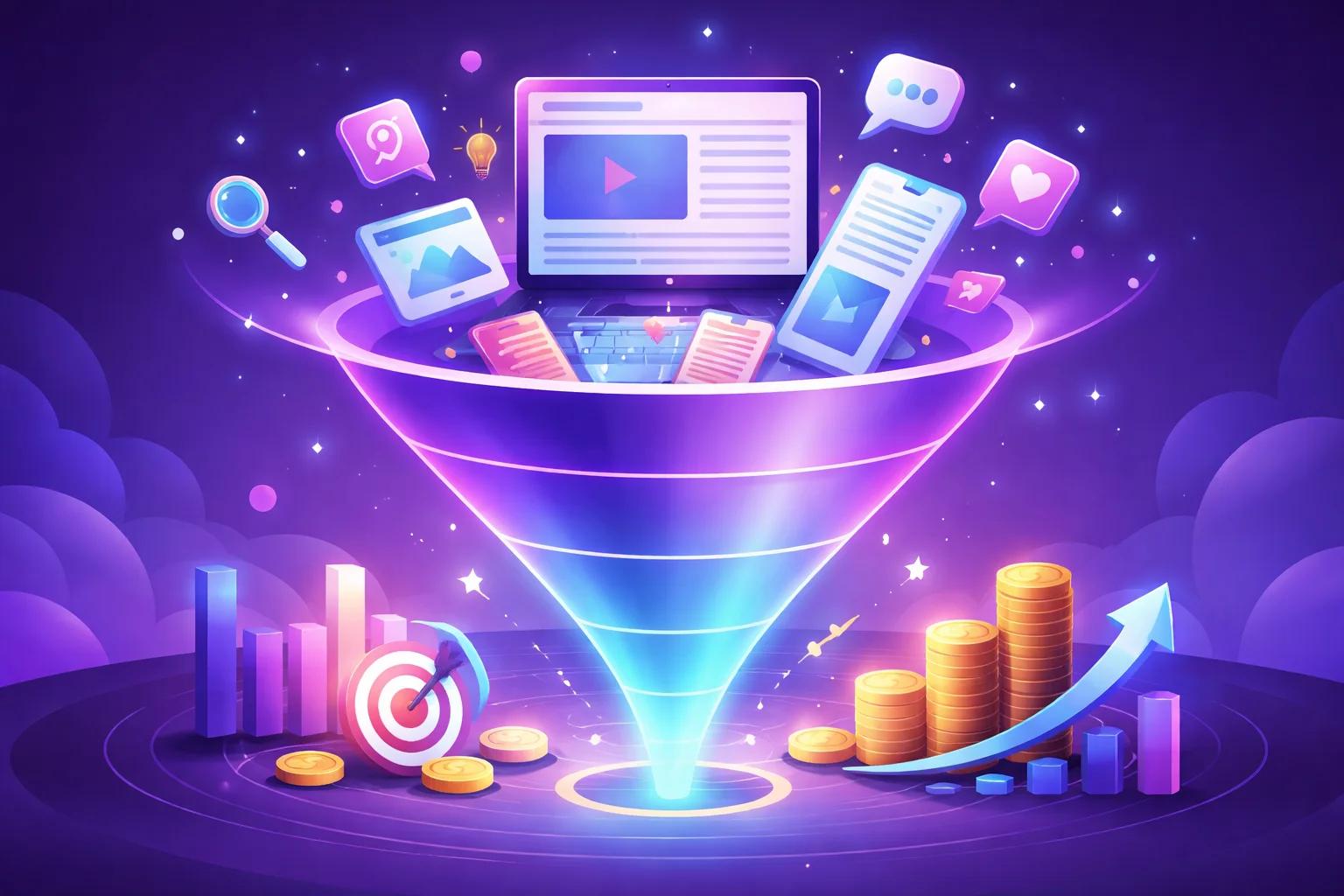
The Indispensable Role of Blog Content in Navigating the Marketing Funnel
The marketing funnel remains a foundational framework for understanding the customer journey, guiding prospects from initial awareness to loyal advocacy. However, in an increasingly fragmented digital landscape, simply having a funnel isn't enough; the challenge lies in effectively engaging and propelling individuals through each stage. Businesses often grapple with how to consistently deliver value, build trust, and drive action without resorting to overt sales pitches at every turn.
This is where strategic blog content emerges as an unparalleled asset. Far from being mere filler, a well-crafted blog post acts as a versatile workhorse, capable of addressing specific user needs and intentions at every touchpoint within the funnel. It's the connective tissue that educates, persuades, and converts, transforming passive visitors into active participants in their own purchasing journey.
Understanding how to precisely align your content strategy with each stage of the marketing funnel is not just beneficial; it's critical for sustainable growth. This deep dive will illuminate the strategic intent behind blog content at every phase, demonstrating how a meticulously planned content ecosystem can enhance visibility, cultivate relationships, and ultimately, drive measurable business outcomes.
Deconstructing the Modern Marketing Funnel
The marketing funnel, often visualized as a multi-stage journey, outlines the theoretical path a potential customer takes from first learning about a product or service to making a purchase and beyond. While its core principles endure, the modern funnel is less linear and more dynamic, influenced by diverse digital touchpoints and user-driven research.
Why the Funnel Still Matters
Despite its evolving nature, the marketing funnel provides an indispensable framework for strategists. It allows for the segmentation of audiences based on their proximity to a purchase decision, enabling the creation of targeted messages and content. Without this structure, marketing efforts risk being unfocused, inefficient, and ultimately, ineffective in guiding prospects toward conversion.
The Evolving Landscape: Beyond Linear Journeys
Today's customer journey is rarely a straightforward progression. Users jump between stages, conduct extensive research, and consult multiple sources. This complexity underscores the need for a robust content strategy that anticipates these shifts, providing relevant information and support regardless of where a user might be in their decision-making process. Blog content, with its adaptability, is perfectly positioned to meet this demand.
Strategic Content Alignment: Fueling Each Funnel Stage
Effective blog content isn't a one-size-fits-all solution. Its power lies in its ability to be tailored to the specific needs and psychological state of a user at each distinct stage of the marketing funnel.
Top of the Funnel (TOFU): Awareness & Discovery
At the top of the funnel, prospects are typically problem-aware but not yet solution-aware, or they are simply exploring a topic of interest. The goal here is to attract a broad audience, establish brand presence, and provide valuable, non-promotional information.
- Content Types: Informational articles, "what is" guides, industry news and trends, listicles, introductory explainers, thought leadership pieces.
- Primary Goals: Generate organic traffic, increase brand visibility, establish authority and thought leadership, answer broad questions.
- SEO/AEO Focus: Target broad, high-volume keywords; answer common questions directly for featured snippets and AI search; focus on comprehensive coverage of a topic.
- Conversion Focus: Soft calls to action (CTAs) like subscribing to a newsletter, following on social media, or exploring related content.
Middle of the Funnel (MOFU): Consideration & Evaluation
In the middle of the funnel, prospects have identified their problem and are actively researching potential solutions. They are evaluating options, comparing features, and seeking deeper insights. Blog content here needs to educate, build trust, and demonstrate expertise without being overtly salesy.
- Content Types: "How-to" guides, comparison posts (e.g., "Product A vs. Product B"), case studies, expert interviews, solution-oriented articles, detailed tutorials, whitepapers (promoted via blog).
- Primary Goals: Nurture leads, build credibility, demonstrate product/service benefits, educate on specific solutions, address common objections.
- SEO/AEO Focus: Target long-tail keywords related to specific problems or solutions; optimize for comparison queries; provide data-backed answers and expert opinions.
- Conversion Focus: CTAs for downloading an e-book, signing up for a webinar, requesting a consultation, or viewing a demo.
Bottom of the Funnel (BOFU): Conversion & Decision
At the bottom of the funnel, prospects are ready to make a purchase decision. They are looking for reassurance, specific product details, and reasons to choose your solution over competitors. Blog content here must directly address their final concerns and facilitate the conversion.
- Content Types: Detailed product/service reviews, customer testimonials, in-depth solution breakdowns, frequently asked questions (FAQs) about specific offerings, pricing guides, "why choose us" articles.
- Primary Goals: Drive sales, secure sign-ups, generate inquiries, overcome final objections, provide clear value propositions.
- SEO/AEO Focus: Target high-intent, transactional keywords; provide direct, concise answers to purchase-related questions; optimize for comparison with competitors.
- Conversion Focus: Direct CTAs such as "Buy Now," "Request a Demo," "Get a Quote," "Start Your Free Trial."
Post-Conversion: Retention & Advocacy
The funnel doesn't end at conversion. Retaining customers and transforming them into advocates is crucial for long-term business success. Blog content plays a vital role in fostering loyalty, encouraging repeat business, and generating referrals.
- Content Types: User guides, tips and tricks for maximizing product use, advanced tutorials, customer success stories, community updates, thought leadership for existing customers, exclusive content.
- Primary Goals: Enhance customer satisfaction, drive product adoption, encourage upsells/cross-sells, foster community, generate referrals and positive reviews.
- SEO/AEO Focus: Support queries, troubleshooting guides, "how to use X feature" content; optimize for long-term value and customer support.
- Conversion Focus: CTAs for upgrading plans, referring a friend, leaving a review, or exploring advanced features.
Beyond the Funnel: Maximizing Impact with SEO, AEO, and Conversion Strategies
While aligning content with funnel stages is paramount, its true power is unleashed when optimized for search engines, AI answer engines, and conversion.
The SEO Imperative: Visibility and Authority
Search Engine Optimization (SEO) ensures your valuable blog content is discoverable by your target audience. This involves meticulous keyword research, on-page optimization (title tags, meta descriptions, headings, internal linking), technical SEO best practices, and strategic link building to establish domain authority. A well-optimized blog post isn't just found; it's trusted.
AEO: Answering the Modern Searcher
Answer Engine Optimization (AEO) extends traditional SEO to cater to the evolving landscape of AI-powered search (ChatGPT, Gemini, Perplexity). This means structuring content to provide direct, concise answers to specific questions, utilizing structured data (schema markup), adopting conversational language, and anticipating the nuances of intent matching that AI engines prioritize. The goal is to be the authoritative source for direct answers, securing featured snippets and prime AI-generated responses.
Conversion-Centric Content: Guiding the User to Action
Every piece of blog content, regardless of its funnel stage, should have a clear purpose and a path forward for the user. This means integrating compelling calls to action (CTAs) that are relevant to the content and the user's stage in the funnel. Beyond explicit CTAs, conversion-centric content focuses on clear value propositions, a seamless user experience, and building trust through transparent, expert-driven information.
Measuring Impact: From Traffic to Revenue
A strategic blog content initiative demands continuous measurement and adaptation. Tracking key performance indicators (KPIs) allows for data-driven optimization and demonstrates the tangible return on investment.
Key Metrics to Track
- Traffic: Page views, unique visitors, organic search traffic.
- Engagement: Time on page, bounce rate, scroll depth, comments, social shares.
- Lead Generation: Newsletter sign-ups, content downloads, form submissions.
- Conversion Rates: Sales, demo requests, trial sign-ups directly attributed to blog content.
- Customer Lifetime Value (CLTV): For post-conversion content, tracking repeat purchases and referrals.
Iteration and Optimization
The digital landscape is dynamic. Regularly analyzing content performance against established goals allows for iterative improvements. This includes updating evergreen content, refining keyword targeting, experimenting with different CTA placements, and adapting to new search engine algorithms and AI capabilities. A proactive approach ensures your blog content remains a powerful, evolving asset.
The Enduring Power of Strategic Blog Content
Blog content is far more than a publishing exercise; it is a strategic imperative that underpins a robust marketing funnel. By meticulously aligning content with each stage of the customer journey—from initial awareness to post-purchase advocacy—businesses can create a cohesive, valuable, and conversion-driven experience.
In an era dominated by information overload and AI-powered search, the ability to deliver high-quality, relevant, and trustworthy content is the ultimate differentiator. Embrace the strategic power of your blog, and watch as it transforms casual visitors into loyal customers, propelling your business forward with every expertly crafted post.